
How to Help Baby Crawl: Pediatric PT Tips for Asymmetrical Crawling & Scooting


When your baby starts exploring movement, it is one of the most exciting phases of parenthood! But what happens when your little one starts dragging one leg, army crawling using only their arms, or scooting on their bottom instead of getting up on all fours?
As a pediatric physical therapist, parents ask me all the time:
"Does it really matter how my baby crawls, as long as they are moving?"
The short answer: Yes, symmetrical hands-and-knees crawling is a crucial developmental milestone.
While any movement is great, classic cross-body crawling (moving the right arm with the left leg, and vice versa) builds bilateral brain coordination, core stability, shoulder strength, and hip alignment that lays the foundation for balance and walking.
Here is why your baby might be using an alternative crawling pattern, and 3 simple living-room exercises you can do today to guide them onto hands and knees.
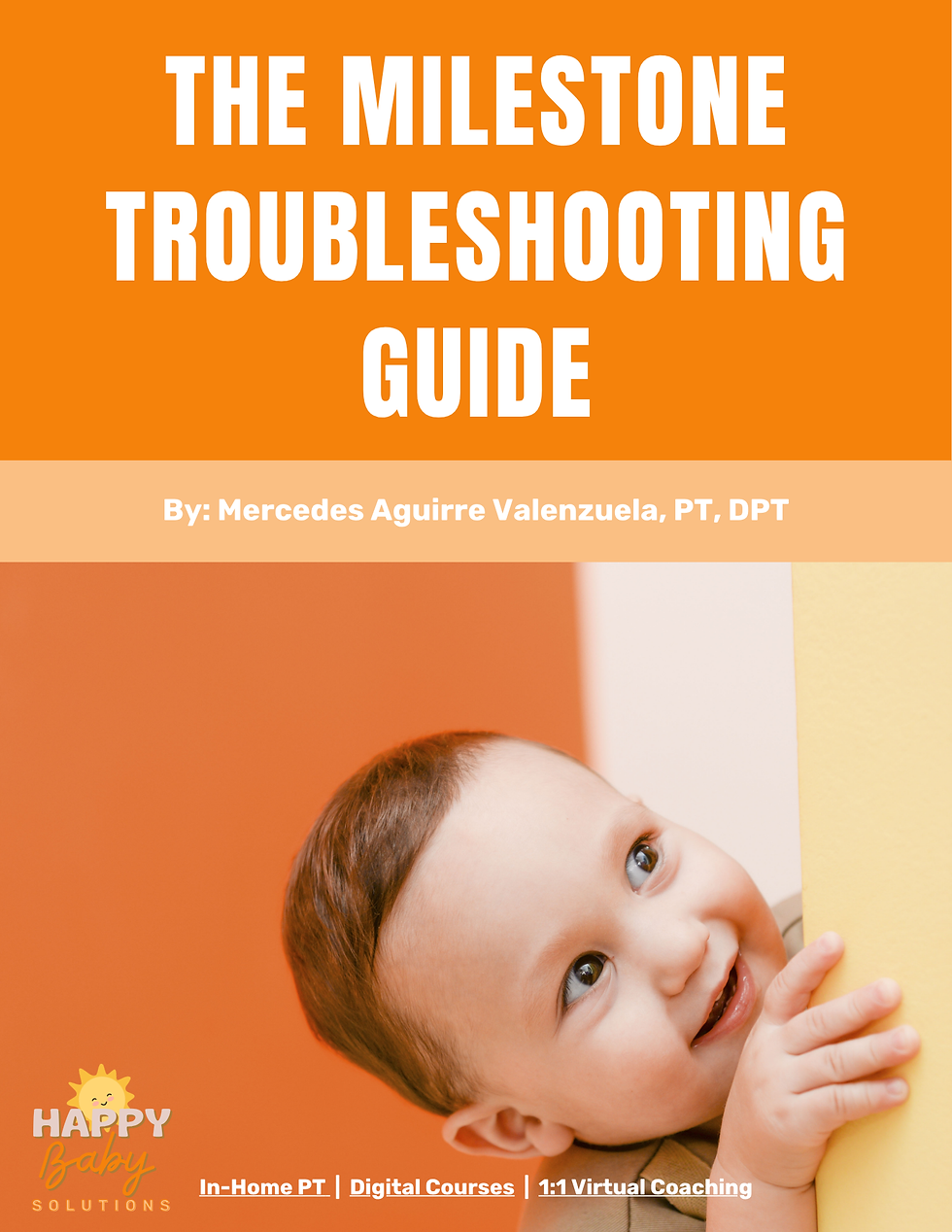
Grab The Milestone Troubleshooting Guide, a free quick-reference toolkit I designed as a Doctor of Physical Therapy. Inside, you’ll get targeted checklists to spot hidden tightness, strength gaps, or asymmetry, plus simple exercises you can start doing in your living room today to unlock their next movement!
Why Is My Baby Army Crawling or Scooting?
If your baby is stuck army crawling (belly on the floor) or scooting on their bottom, it usually points to one of three common physical factors:
Hidden Core or Hip Weakness: Pushing up into a tabletop hands-and-knees position requires significant abdominal and glute strength. If their core is weak, pulling with their arms flat on the belly is simply path-of-least-resistance.
Asymmetry or Side Preference: If a baby army crawls by dragging one side or kicking with only one leg, they may have subtle muscle tightness on one side of their trunk or neck (often linked to early position preferences).
Slippery Flooring: Hardwood or tile floors offer zero traction! Knees slip, making it difficult for babies to dig in and push themselves up.
3 Pediatric PT Exercises to Encourage Symmetrical Crawling
1. The Living Room "Speed Bump" (Towel Roll Support)
How to do it: Roll up a small bath towel or foam roller. Place it under your baby’s chest while they are on their tummy so their hands and knees rest naturally on the floor.
Why it works: This takes the weight off their shoulders and core, allowing them to feel what a stable hands-and-knees position feels like without getting tired immediately.
2. Over-the-Thigh Bridge
How to do it: Sit on the floor with your leg extended. Place your baby tummy-down over your thigh so their hands touch the floor on one side and their knees touch on the other. Place a favorite toy just out of reach in front of them.
Why it works: This forces equal weight-bearing through both shoulders and both hips, eliminating asymmetrical habits or bottom-scooting tendencies.
3. Vertical Play at the Couch
How to do it: Place toys on a low couch cushion or ottoman while your baby kneels in front of it.
Why it works: Kneeling strengthens the hip extenders and core, teaching them to bear weight through their knees before they transition into moving forward.
Get the Free Milestone Troubleshooting Guide
Is your baby struggling with tummy time, stuck in an asymmetrical crawl, or falling behind on walking? Don't guess what's wrong.
Grab The Milestone Troubleshooting Guide, a free quick-reference toolkit I designed as a Doctor of Physical Therapy. Inside, you’ll get targeted checklists to spot hidden tightness, strength gaps, or asymmetry, plus simple exercises you can start doing in your living room today to unlock their next movement!

Dr. Mercedes Aguirre Valenzuela
I help babies master tummy time, crawling and walking!
Digital Courses & 1:1 Virtual Coaching
In-home sessions Bergen County, NJ & Rockland County, NY


Comments