
Is Your Baby Army Crawling or Scooting? How to Help Them Crawl on Hands and Knees

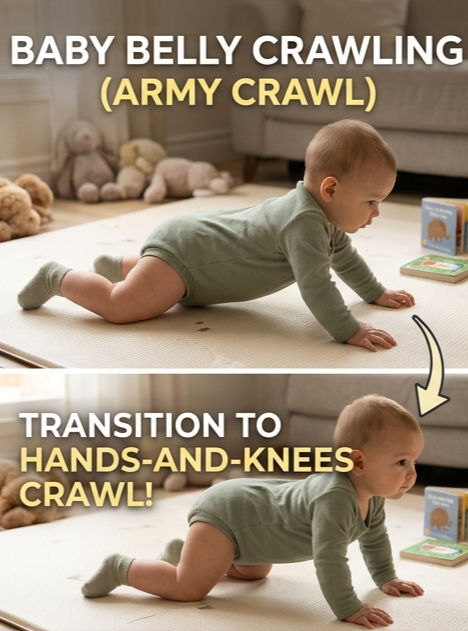
Every baby develops at their own pace, but watching your little one transition from rocking on all fours to actually moving is one of the most exciting milestones. However, as a pediatric physical therapist, one of the most common questions I get from worried parents is:
"My baby is army crawling / scooting on their bottom, is that normal?"
While any form of independent movement is a win, getting your baby into a classic, symmetrical hands-and-knees crawl is incredibly beneficial for their long-term motor skills, core strength, and shoulder stability.
If you are wondering how to encourage your baby to crawl efficiently, here are the exact expert-backed activities and tips I share with the families in my practice.
Grab The Milestone Troubleshooting Guide, a free quick-reference toolkit I designed as a Doctor of Physical Therapy. Inside, you’ll get targeted checklists to spot hidden tightness, strength gaps, or asymmetry, plus simple exercises you can start doing in your living room today to unlock their next movement!

The Milestone Window: When Do Babies Crawl?
Most babies typically begin to crawl between 6 to 10 months of age. Before they take off, you might notice classic signs of readiness, such as:
Pushing up onto hands and knees and rocking back and forth.
Pivoting in a circle while on their belly.
Pushing themselves backward before figuring out how to go forward.
If your baby is approaching the 10-month mark and hasn't started moving, or if they have adopted an asymmetrical movement like an army crawl (pulling only with their arms) or bottom scooting, a few targeted adjustments to their daily play can make a massive difference.
3 Easy Activities to Help Your Baby Crawl on Hands and Knees
To get your baby off their belly or bottom and onto all fours, you need to help them build core strength, balance, and body awareness. Try integrating these three simple activities into your daily routine:
1. The Towel or Belly Sling Support
If your baby struggles to lift their belly off the floor, they might just need a little help experiencing what the hands-and-knees position feels like.
How to do it: Roll up a small towel or use a baby scarf. Place it under your baby’s chest and belly. Gently lift up on the ends of the towel so their belly clears the floor, allowing their hands and knees to support their weight.
Why it works: It takes the pressure off their core while building strength in their shoulders and hips.
2. Over-the-Leg Obstacles
Structured obstacles are fantastic for breaking up a stubborn army crawl or bottom scooting habit because they force the baby to lift their hips.
How to do it: Sit on the floor with your legs straight out in front of you. Place a favorite, highly motivating toy on the other side of your thigh. Encourage your baby to crawl over your leg to reach the toy.
Why it works: To get over your leg, they naturally have to lift their belly and push off their knees.
3. Elevated Surface Play
Before a baby can crawl forward, they need to feel comfortable bearing weight through their hands and knees statically.
How to do it: Use a couch cushion, a low ottoman, or a firm nursing pillow. Place your baby's hands and upper body on the elevated surface while their knees remain on the floor. Position an engaging toy on the cushion right in front of them.
Why it works: This position builds massive shoulder and hip stability, which are the exact muscles required to drive forward propulsion.
Avoid the "Baby Walking" Trap Too Early
When parents want to know how to encourage a baby to crawl, they sometimes resort to standing the baby up or placing them in standing activity containers.
As tempting as it is to skip straight to walking, crawling is a crucial developmental milestone. The cross-lateral movement (moving the opposite arm and leg together) strengthens the corpus callosum in the brain, which connects the left and right hemispheres. This supports future skills like coordination, reading, and spatial awareness. Try to prioritize floor play over standing containers during this window!
Get the Free Milestone Troubleshooting Guide
Is your baby struggling with tummy time, stuck in an asymmetrical crawl, or falling behind on walking? Don't guess what's wrong.
Grab The Milestone Troubleshooting Guide, a free quick-reference toolkit I designed as a Doctor of Physical Therapy. Inside, you’ll get targeted checklists to spot hidden tightness, strength gaps, or asymmetry, plus simple exercises you can start doing in your living room today to unlock their next movement!

Dr. Mercedes Aguirre Valenzuela
I help babies master tummy time, crawling and walking!
Digital Courses & 1:1 Virtual Coaching
In-home sessions Bergen County, NJ & Rockland County, NY


Comments